
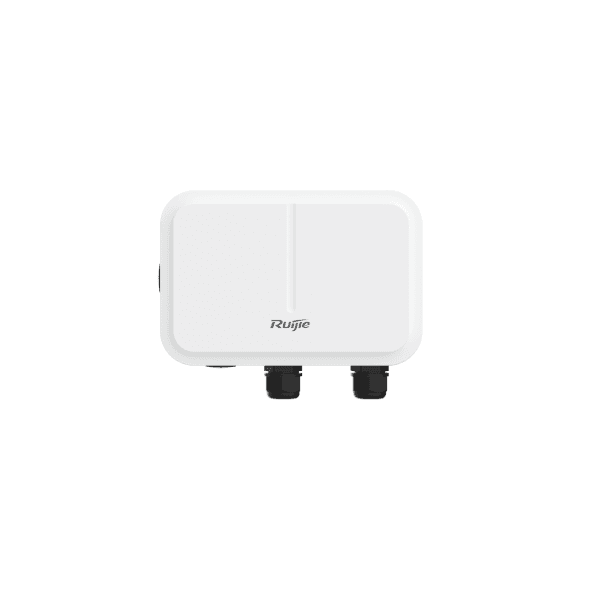
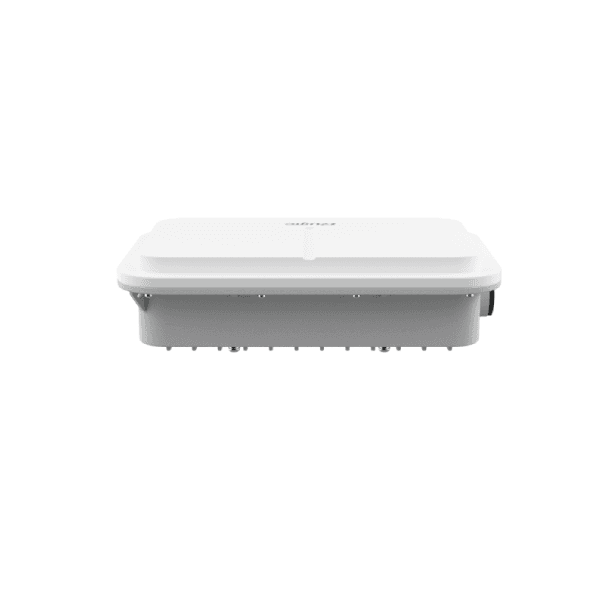

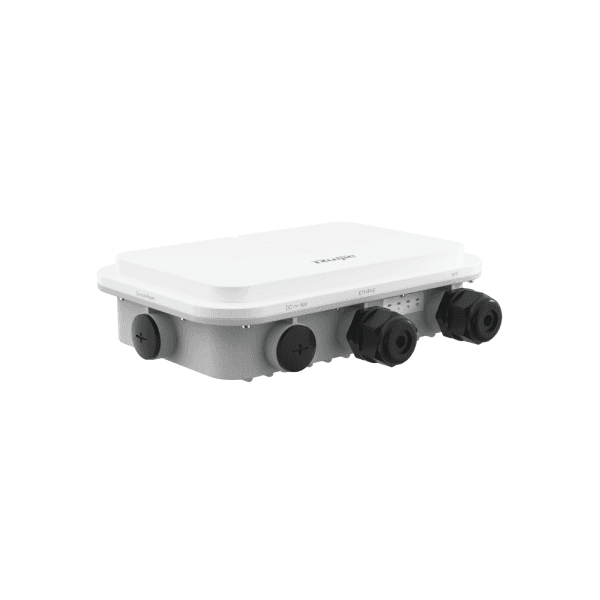


Description
Specifications
| Hardware Specifications | RG-AP680-CD(V3) |
| 802.11n | Four spatial streams
● Radio 1 – 2.4 GHz: 2×2 MU-MIMO, two spatial streams ● Radio 2 – 5 GHz: 4×4 MU-MIMO, two spatial streams Channels: ● Radio 1 – 2.4 GHz: 20 MHz and 40 MHz ● Radio 2 – 5 GHz: 20 MHz and 40 MHz Combined peak data rate: 0.6 Gbps ● Radio 1 – 2.4 GHz: 6.5 Mbps to 300 Mbps (MCS0 to MCS15 ) ● Radio 2 – 5 GHz: 6.5 Mbps to 300 Mbps (MCS0 to MCS15) Radio technologies: Orthogonal Frequency-Division Multiplexing (OFDM) Modulation types: BPSK, QPSK, 16-QAM, 64-QAM, 256-QAM Packet aggregation: ● Aggregate MAC Protocol Data Unit (A-MPDU) ● Aggregate MAC Service Data Unit (A-MSDU) Dynamic Frequency Selection (DFS) Cyclic Delay/Shift Diversity (CDD/CSD) Maximum Ratio Combining (MRC) Space-Time Block Coding (STBC) Low-Density Parity Check (LDPC) Transmit beam-forming (TxBF) |
| 802.11ac | Two spatial streams
● Radio 2 – 5 GHz: 2×2 MU-MIMO, two spatial streams Channels: ● Radio 2 – 5 GHz: 20 MHz, 40 MHz, 80 MHz, and 160 MHz Combined peak data rate: 1.733 Gbps ● Radio 2 – 5 GHz: 6.5 Mbps to 1.733 Gbps (MCS0 to MCS9) Radio technologies: Orthogonal Frequency-Division Multiplexing (OFDM) Modulation types: BPSK, QPSK, 16-QAM, 64-QAM, 256-QAM Packet aggregation: ● Aggregate MAC Protocol Data Unit (A-MPDU) ● Aggregate MAC Service Data Unit (A-MSDU) Dynamic Frequency Selection (DFS) Cyclic Delay/Shift Diversity (CDD/CSD) Maximum Ratio Combining (MRC) Space-Time Block Coding (STBC) Low-Density Parity Check (LDPC) Transmit beam-forming (TxBF) |
| 802.11ax | Four spatial streams
● Radio 1 – 2.4 GHz: 2×2 uplink/downlink MU-MIMO, two spatial streams ● Radio 2 – 5 GHz: 2×2 uplink/downlink MU-MIMO, two spatial streams Channels: ● Radio 1 – 2.4 GHz: 20 MHz and 40 MHz ● Radio 2 – 5 GHz: 20 MHz, 40 MHz, 80 MHz, and 160 MHz Combined peak data rate: 2.976 Gbps: ● Radio 1 – 2.4 GHz: 8.6 Mbps to 0.574 Gbps (MCS0 to MCS11) ● Radio 2 – 5 GHz: 8.6 Mbps to 2.402 Gbps (MCS0 to MCS11) Radio technologies: uplink/downlink Orthogonal Frequency-Division Multiple Access (OFDMA) Modulation types: BPSK, QPSK, 16-QAM, 64-QAM, 256-QAM, 1024-QAM Packet aggregation: ● Aggregate MAC Protocol Data Unit (A-MPDU) ● Aggregate MAC Service Data Unit (A-MSDU) Dynamic Frequency Selection (DFS) Cyclic Delay/Shift Diversity (CDD/CSD) Maximum Ratio Combining (MRC) Space-Time Block Coding (STBC) Low-Density Parity Check (LDPC) Transmit beam-forming (TxBF) WPA3 |
| Antenna | Wi-Fi
● 2.4 GHz: two built-in directional antennas, with peak antenna gain of 9 dBi. ● 5 GHz: two built-in directional antennas, with peak antenna gain of 9 dBi. Bluetooth ● One integrated vertically polarized omnidirectional antenna, t with peak antenna gain of 4.5 dBi. |
| Port | 1 x 2.5GE SFP port
1 x 10/100/1000Base-T port 1 x RJ45 console port (serial console port) 1 x Bluetooth 5.0 |
| Status LED | 1 x multi-color system status LED
● AP power-on status ● Software initialization status and upgrade status ● Uplink service interface status ● Wireless user online status ● CAPWAP tunnel timeout ● Specific AP locating Three single-color signal strength LEDs: ● Whether bridging is enabled ● Whether bridging is successful ● Wireless signal strength after successful bridging |
| Button | 1 x Reset button
● Press the button for shorter than 2 seconds. Then the device restarts. ● Press the button for longer than 5 seconds. Then the device restores to factory settings. |
| Dimensions (W x D x H) | Main unit: 251 mm x 168 mm x 64 mm (9.88 in. x 6.61 in. x 2.52 in.)
Shipping: 405 mm x 232 mm x 325 mm (15.94 in. x 9.13 in. x 12.79 in.) |
| Weight | Main unit: 1.5 kg (3.31 lbs)
Mounting bracket: 0.2 kg (0.44 lbs) Shipping: 2.92 kg (6.44 lbs) |
| Mounting | Wall/Pole-mounting (a mounting bracket is delivered with the main unit) |
| Input power supply | The AP supports the following two power supply modes:
● 48 V DC/0.35 A power input over DC connector: The DC connector accepts 2.0 mm/6.3 mm center-positive circular plug. A DC power supply needs to be purchased independently. ● PoE input over ETH/PoE: The power source equipment (PSE) complies with IEEE 802.3af/at standard (PoE/PoE+). Note: If both DC power and PoE are available, DC power is preferred. |
| Maximum power consumption | Maximum power consumption: 12.95 W
● DC power: 12.95 W ● 802.3at (PoE+): 12.95 W ● 802.3af (PoE): 12.95 W ● Idle mode: 6 W |
| Environment | Storage temperature: –40°C to +85°C (–40°F to +185°F)
Storage humidity: 0% RH to 100% RH (non-condensing) Storage altitude: –500 m to +5,000 m (–1640.42 ft. to +16,404.20 ft.) Operating temperature: –40°C to +65°C (-40°F to +149°F) Operating humidity: 0% RH to 100% RH (non-condensing) Operating altitude: –500 m to +4,000 m (–1,640.42 ft. to +13,123.36 ft.) Note: At an altitude in the range of 1,800–4,000 m (5,905.51–13,123.36 ft.), every time the altitude increases by 166 m (544.62 ft.), the maximum temperature decreases by 1°C (1.8°F). |
| Mean Time Between Failure (MTBF) | 200,000 hours (22 years) at the operating temperature of 25°C (77°F) |
| System memory | 512 MB DRAM, 128 MB flash |
| Transmit power | 2.4 GHz
● Maximum transmit power: 28 dBm (631mW) ● Minimum transmit power: 10 dBm (10 mW) 5 GHz ● Maximum transmit power: 28 dBm (631mW) ● Minimum transmit power: 10 dBm (10 mW) Note: ● Adjusting the transmit power by percentage (recommended) and in 1dBm increments. ● The transmit power is limited by local regulatory requirements. For details, see WLAN Country or Region Codes and Channel Compliance. |
